
Sun protection in the South – what holidaymakers should keep in mind
Sun protection in the South: How to protect your skin and eyes properly – tips on UV radiation, sunglasses and care for a safe holiday.
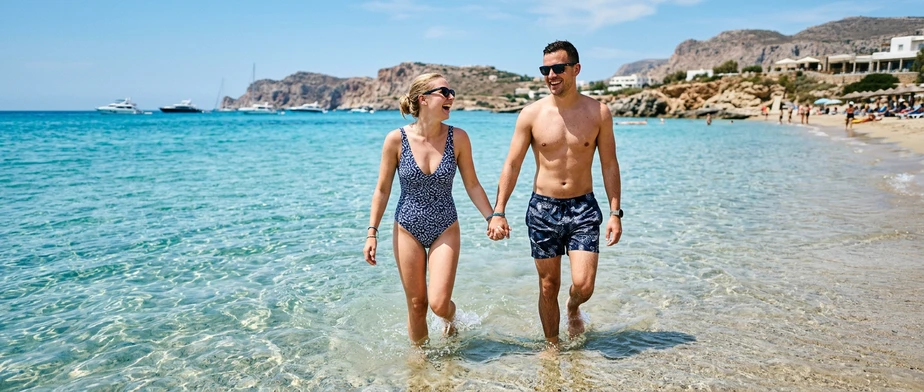
Sun, sea and the lightness of the South – few things feel as much like a holiday as the warm glow of Mediterranean days.
Yet especially in regions of Spain, Italy or Greece, the sun can be more than a feel-good factor. High UV radiation, intense reflections on water and bright surfaces, or hours spent outdoors put eyes and skin under strain. Thoughtful sun protection belongs in your luggage just as much as swimwear. It is not only about sunscreen – choosing the right glasses also plays a key role.
UV radiation in the South – often underestimated
While many people in Central Europe experience the sun as pleasantly mild, UV levels in the South are significantly higher. As early as spring, UV indices above 8 can be measured in Andalusia or on the Balearic Islands – values at which unprotected skin and eyes can be damaged within minutes. Air temperature is deceptive here. Even on windy days or with light cloud cover, around 80 percent of UV rays pass through the clouds.
For the eyes this means constant stress. The cornea reacts sensitively to excessive radiation, which can lead to irritation, inflammation or even long-term damage. Reflected UV rays are particularly risky. They are bounced off the sea, sand or light stone surfaces and hit the eye from unusual angles – often even when you are looking down.
The right sunglasses – more than an accessory
Anyone travelling in the South should see sunglasses as protective equipment, not a fashion extra. The decisive factor is lens quality. Only models with 100 percent UV protection block harmful wavelengths completely. Labels such as “UV400” indicate that radiation up to a wavelength of 400 nanometres is filtered, including invisible but harmful UV-A and UV-B rays.
For suitable models with reliable UV protection, it is worth taking a look at providers such as eyes and more, who combine sun protection with style. Regardless of the brand, buyers should pay attention to an even tint and good workmanship. Cheap lenses without sufficient protection can even cause pupils to dilate more, allowing extra UV radiation to enter the eye.
Polarized lenses are also a sensible choice in the South. They reduce glare, especially from reflected sunlight on water or asphalt. This increases visual comfort when driving or at the beach and noticeably relieves the eyes. Polarized lenses filter horizontal light waves and enable clearer, higher-contrast vision, a benefit that is particularly noticeable around midday.
Eye care in heat and dry air
It is not only radiation that affects the eyes. Hot, dry air also has an impact. In these conditions, tear fluid evaporates faster, which can cause a burning sensation. Air conditioning in hotels, cars or restaurants intensifies the effect. Regular breaks in the shade and targeted moisturising with suitable eye drops help maintain the eye’s natural protective film.
It is also helpful to give the eyes a rest now and then by closing them consciously, especially during long car journeys or walks along sun-drenched streets. Wearing a wide-brimmed hat adds extra protection, because it reduces direct light and shades the eye area.
Protecting skin and eyes goes hand in hand
While sunscreen is now a matter of course for most travellers, eye protection is often neglected. Yet both are closely linked. UV radiation affects the entire body, including skin, eyes and the delicate skin around the eyelids. Good sunglasses do not replace sunscreen, they complement it.
It is important to apply sun protection in good time and to renew it regularly. In the South, putting on cream once in the morning is not enough. Sweat, water and towel contact reduce the effectiveness of the product. Only use products that are specifically suitable for the eye area to avoid irritation.
Protection at the water and in the mountains
Sun exposure is particularly intense in places where it is reflected. At the sea, on boats or in the mountains, the strain increases significantly. In the mountains, UV radiation rises by about ten percent for every 1000 metres of altitude, a factor that is often underestimated on hikes or excursions in southern regions.
Making sun awareness part of your holiday routine
Being aware of the sun does not conflict with relaxation. On the contrary, it helps your holiday stay truly restful – without burning eyes, dry skin or headaches caused by harsh light. Those who follow a few simple rules can enjoy the southern sun without worrying about long-term damage.
More articles

Wellness in Spain: Spas, Yoga and Tranquil Retreats
Spain offers ideal conditions for relaxation: stylish spas, open-air yoga and peaceful retreats set between coastline, mountains and Mediterranean landscapes.

Experience Family Friendly Activities in Spain
Spain delights families with child friendly beaches, theme parks and varied holidays full of fun and adventure.

Experience Spain Actively in Every Season
Spain captivates visitors all year round with nature, culture, coastal landscapes and varied holiday experiences in every season.

Why Spain Is One of Europe’s Most Popular Holiday Destinations
Spain has long been one of Europe’s most popular travel destinations and shows how sun, sea, cuisine and a relaxed way of life can make a holiday truly special.

Enjoy Christmas in a Holiday Home in Spain
Christmas in Spain combines mild days, traditions and shared moments, and shows why a holiday home is a great choice for a winter break.
Enjoy Romantic Seaside Getaways in Spain
Spain delights couples with boat trips, sunsets and romantic holiday moments along the Mediterranean coast.
